
← Stigma Blog
March 31, 2026
From Seed to Sip: The Hemp Plant Lifecycle
Spring marks the start of the hemp growing season. Explore the hemp lifecycle; from planting seeds to harvest, and how it becomes hemp-derived beverages.
The Season Begins
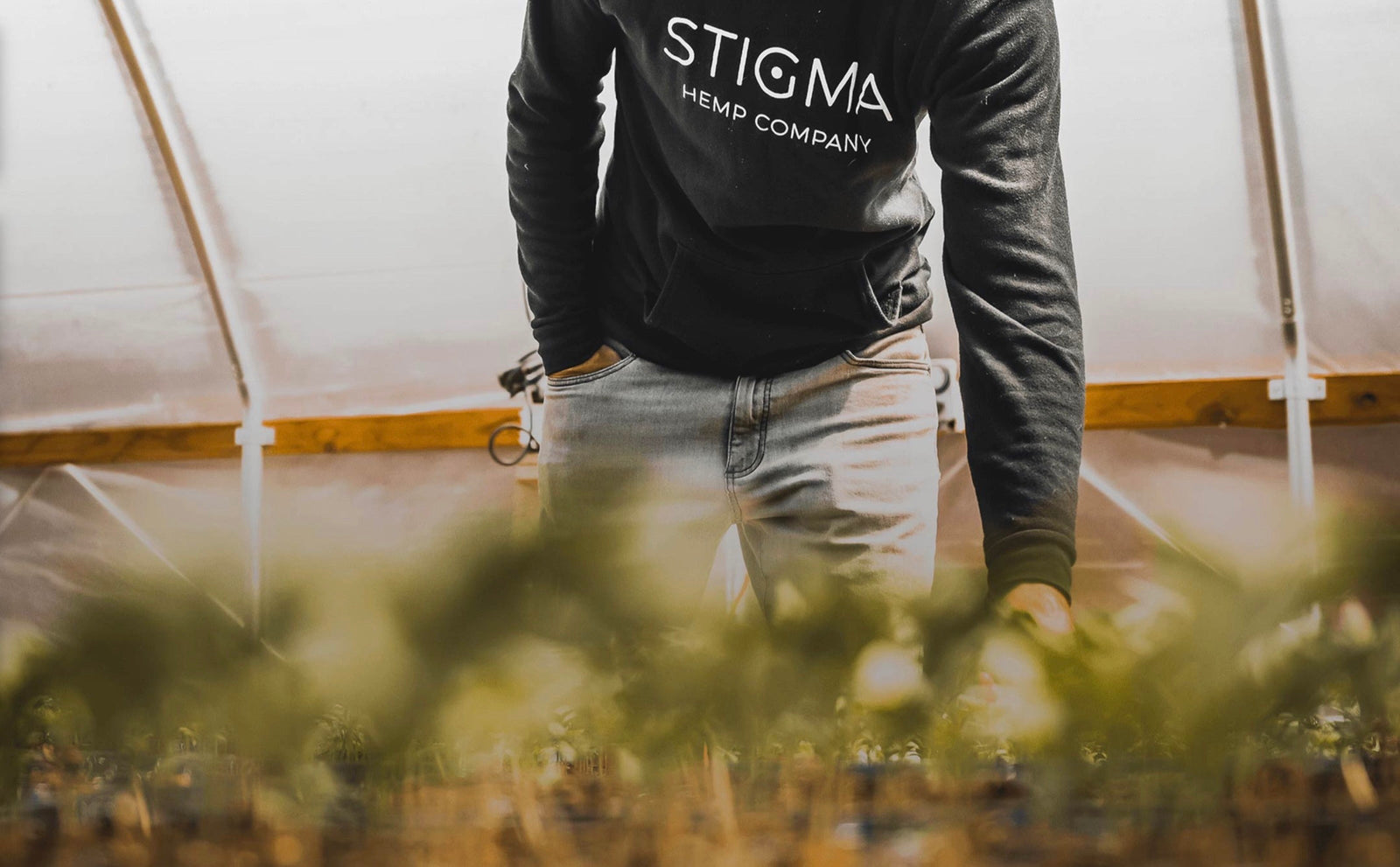
As the days grow longer and temperatures begin to rise, spring signals the start of something important in agriculture: planting season. For hemp farmers, this time of year marks the beginning of a new growing cycle. One that will unfold over the coming months before the plant is eventually harvested, processed, and transformed into the products consumers know today.
Hemp is often discussed in the context of finished products — beverages, tinctures, or edibles — but every one of those products begins the same way: with a seed, soil, and a growing season.
Understanding the lifecycle of the hemp plant helps reveal how much care, timing, and agricultural expertise go into every stage of the process.
Germination — The First Weeks
The hemp lifecycle begins with germination. During this stage, seeds are planted in carefully prepared soil or started in controlled greenhouse environments. Warmth and moisture activate the seed, allowing a small root to emerge before the first leaves begin to form.
Early development is delicate. Young hemp plants are sensitive to temperature swings, pests, and soil conditions, which is why many growers start seedlings indoors before transplanting them into fields once conditions stabilize.
Spring weather plays a critical role here. The timing of planting can influence the entire crop cycle, which is why farmers closely watch soil temperatures and frost forecasts before beginning large-scale planting.
Vegetative Growth — Building the Plant
As spring transitions into early summer, hemp plants enter the vegetative stage — a period of rapid growth. With increasing sunlight and longer days, plants focus on building structure: stems strengthen, leaves expand, and root systems deepen into the soil.
During this phase, farmers focus on nurturing healthy growth through irrigation, nutrient management, and pest monitoring. Strong vegetative development is essential because it lays the foundation for what comes later: flowering and cannabinoid production.
The plant’s energy during this stage is directed toward creating the biomass that will ultimately support flower development.
Flowering — Where Cannabinoids Form
As daylight hours begin to shorten later in the growing season, hemp plants transition into the flowering stage. This is when the plant begins producing the resin-rich flowers that contain cannabinoids and aromatic compounds known as terpenes.
For hemp grown for cannabinoid extraction, this phase is particularly important. The plant’s chemical profile — including cannabinoids like CBD or THC — develops during this period, influenced by genetics, environmental conditions, and cultivation practices.
Farmers carefully monitor the crop throughout flowering, ensuring plants remain healthy and harvesting at the right time to preserve quality.
Harvest and Processing
Harvest typically occurs in late summer or early fall, depending on the variety of hemp being grown and the desired cannabinoid profile.
After harvesting, the plants go through drying and curing processes designed to stabilize the plant material and preserve its compounds. From there, hemp can be processed further through extraction methods that isolate cannabinoids and other plant components.
These extracts eventually become ingredients in a wide range of products — including Stigma beverages made using nanoemulsion technology, which helps cannabinoids blend evenly into liquids.
In this way, something that begins as a small seed in spring can eventually become a carefully crafted drink months later.
Why Spring Planting Matters More Than Ever
For many farmers, hemp represents more than just another crop. Over the past decade, it has become an important part of agricultural diversification, offering growers an opportunity to participate in emerging markets.
Hemp can fit into crop rotation systems, provide alternative revenue streams, and support new industries built around plant-based products.
But spring planting decisions are often influenced by more than weather alone. Regulatory changes and evolving policies around hemp-derived products can affect how farmers plan their growing seasons and whether they commit acreage to hemp at all.
Because planting begins in spring, uncertainty at this stage can ripple throughout the entire agricultural year.
Understanding hemp as an agricultural crop — rather than only as a finished product — highlights the broader ecosystem that supports the industry: farmers, processors, manufacturers, and the communities connected to them.
From Field to Can
By the time a hemp-derived beverage reaches someone’s hand, it has already traveled through months of cultivation, harvest, and processing.
It started in the soil at the beginning of the growing season — shaped by sunlight, climate, and the work of the farmers who grow the plant.
Every product is part of that longer agricultural story.
From seed to sip, the lifecycle of hemp reflects the same rhythms that guide farming everywhere: planting, growth, harvest, and renewal with the next season.
At Stigma, we believe great products start with respect for the plant and the agricultural systems behind it.
Spring is where that story begins.
